Why are supermarket fridges connected to the internet?
A fridge can keep milk cold without Wi-Fi. See why a supermarket connects its cabinets, who gets the overnight alarm and what the European fridge hacks changed.
Supermarket fridges are connected to the internet so staff can spot problems without standing beside them. The fridge does the cooling. The connection lets it tell someone when something is wrong.
Why is that useful?
Imagine a shop closes at 10pm. At 2am, one of its fridges starts getting too warm.
An alarm sounding in an empty shop might go unheard. An internet connection can get a warning to the manager’s phone, giving someone a chance to check the fridge before the food spoils.
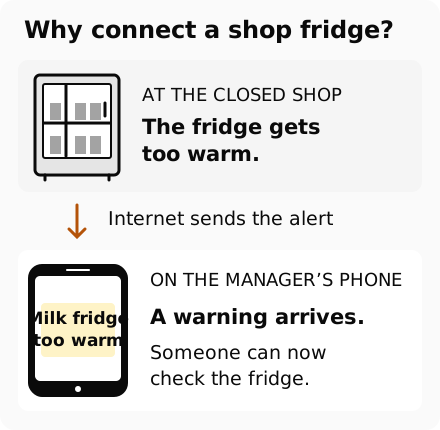
A supermarket may have lots of fridges across several branches. A monitoring screen can show staff which one needs attention. Refrigeration suppliers offer these monitoring and alarm services.
People can still check temperatures by hand. The useful extra is finding out that something has changed between those checks, including overnight.
So how did the fridge hack happen?
Some systems let engineers change settings remotely as well as check temperatures. If an intruder gets access to those controls, they can interfere with the cooling.
EU authorities confirmed a wave of refrigeration incidents on 1–2 November 2026. France’s cyber response team had already warned about compromised remote controls. That does not mean every connected fridge was affected, or that every break-in happened in the same way.
Wouldn’t it be safer to disconnect them?
That could also remove useful warnings. A better question is: who needs to see the temperature, and who needs to change it?
Those can be separate permissions. Staff can receive alerts while only authorised engineers can adjust the settings. France’s guidance recommends keeping the controls off the public internet and using a protected connection for remote access.
If you run a shop, ask your refrigeration supplier: “Who gets the warning if a fridge warms up tonight—and who can change its settings?”
Getting information to the right person is useful well beyond the supermarket. Klikkit’s automation services can help with everyday jobs such as routing customer enquiries, sending follow-up emails and preparing reports. Tell us which repetitive task takes up your time.